
Milano Cortina 2026 supported 130,000 applicants and 18,000 volunteers without building a call center-sized team.
Messages handled from applications through the final shifts.
Applicants supported while organizing a workforce of 18,000 volunteers.
Automated conversations resolved without reaching a human agent.
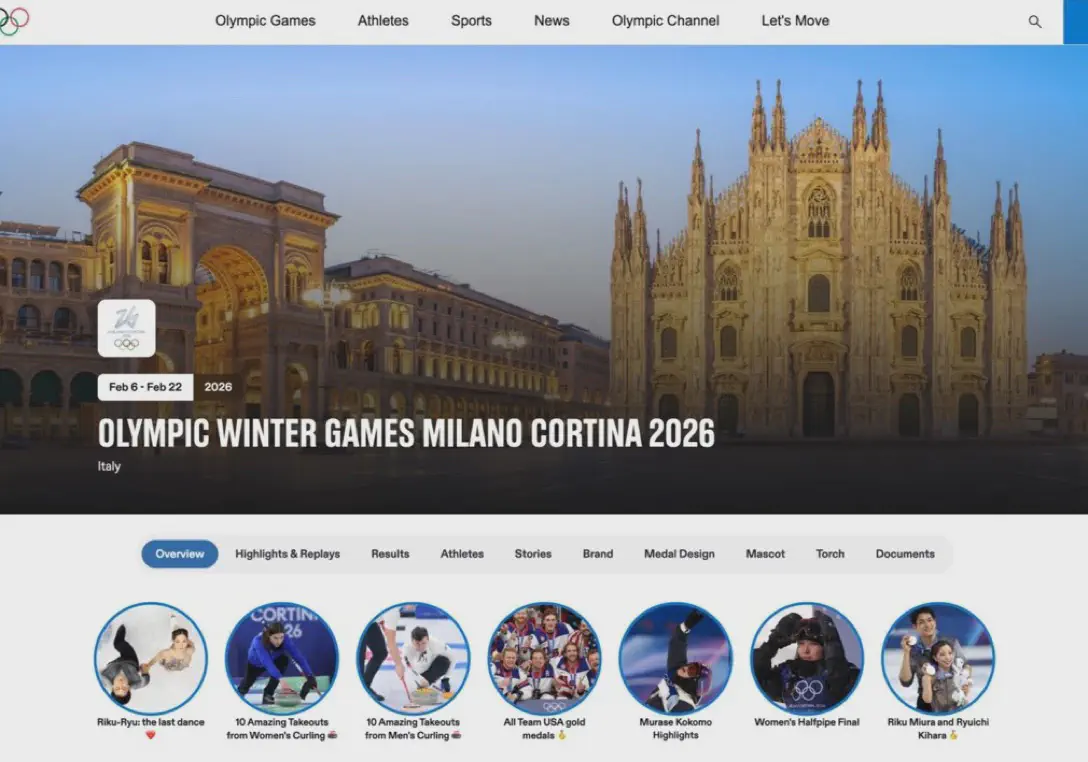
Fondazione Milano Cortina 2026 organized 116 events across two host cities and venues throughout northern Italy. Around 130,000 people applied to volunteer, and 18,000 joined the workforce behind the Games.
Those volunteers signed up months in advance and traveled to be part of a once-in-a-lifetime event. A missed answer could leave someone outside a venue on a cold morning, unsure where to report or whether their accreditation was ready.
Workforce Systems Expert Leonardo Cohen had already run workforce systems for the FIFA World Cup in Qatar. Even with that experience, the scale of Milano Cortina 2026 gave him pause.
It was massive. The international side, the complexity, the volume coming in. Massive.
 Leonardo Cohen, Workforce Systems Expert at Milano Cortina 2026
Volunteer support had a deadline that could not move. A routine question during recruitment might wait, but an issue raised during a live shift could need an answer in ten minutes. The operation also had to work in Italian and English across venues throughout northern Italy.
Adding enough people to absorb every message was not an option. Automation had to clear routine questions on its own and send sensitive or unusual cases to the right person the first time.
Cohen set one rule for the system: everything had to stay in one place. A volunteer's first application and a time-sensitive question during a shift needed the same history, even when the conversation moved from AI to a person or from chat to email.
The team also needed to launch quickly and run the operation themselves. Three separate tools for automation, live conversations, and email tickets would create too many places for a request to disappear.
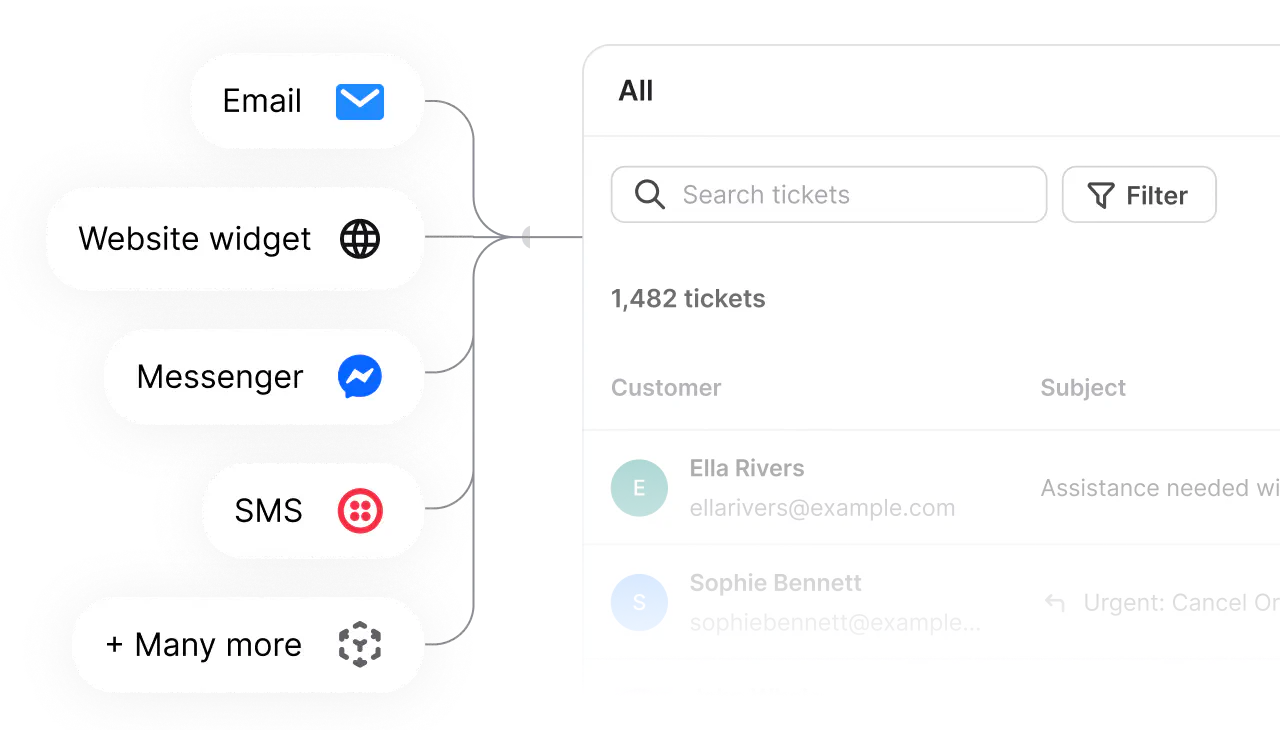
Text brought AI Agent, live support, and email tickets into one platform. Most volunteers first reached AI Agent, which sorted Italian and international volunteers into the right flow without someone managing each conversation.
Across nearly 49,000 conversations, AI Agent produced 448,000 answers while keeping routine questions out of the human queue. More than 72,000 sensitive or complicated cases became tracked tickets with their history intact and a clear route to the right department.
Email remained central to the operation. When a conversation needed a person, the help desk gave the team ownership of the request and the context to continue it.
Email-based support is still the big thing.
Leonardo Cohen, Workforce Systems Expert at Milano Cortina 2026
Cohen expected onboarding to be difficult with two languages and dozens of volunteer roles in play. Instead, a 30-minute walkthrough was enough for agents to start working on requests that same day.
The training was straightforward. Easy to get agents going on it.
Leonardo Cohen, Workforce Systems Expert at Milano Cortina 2026
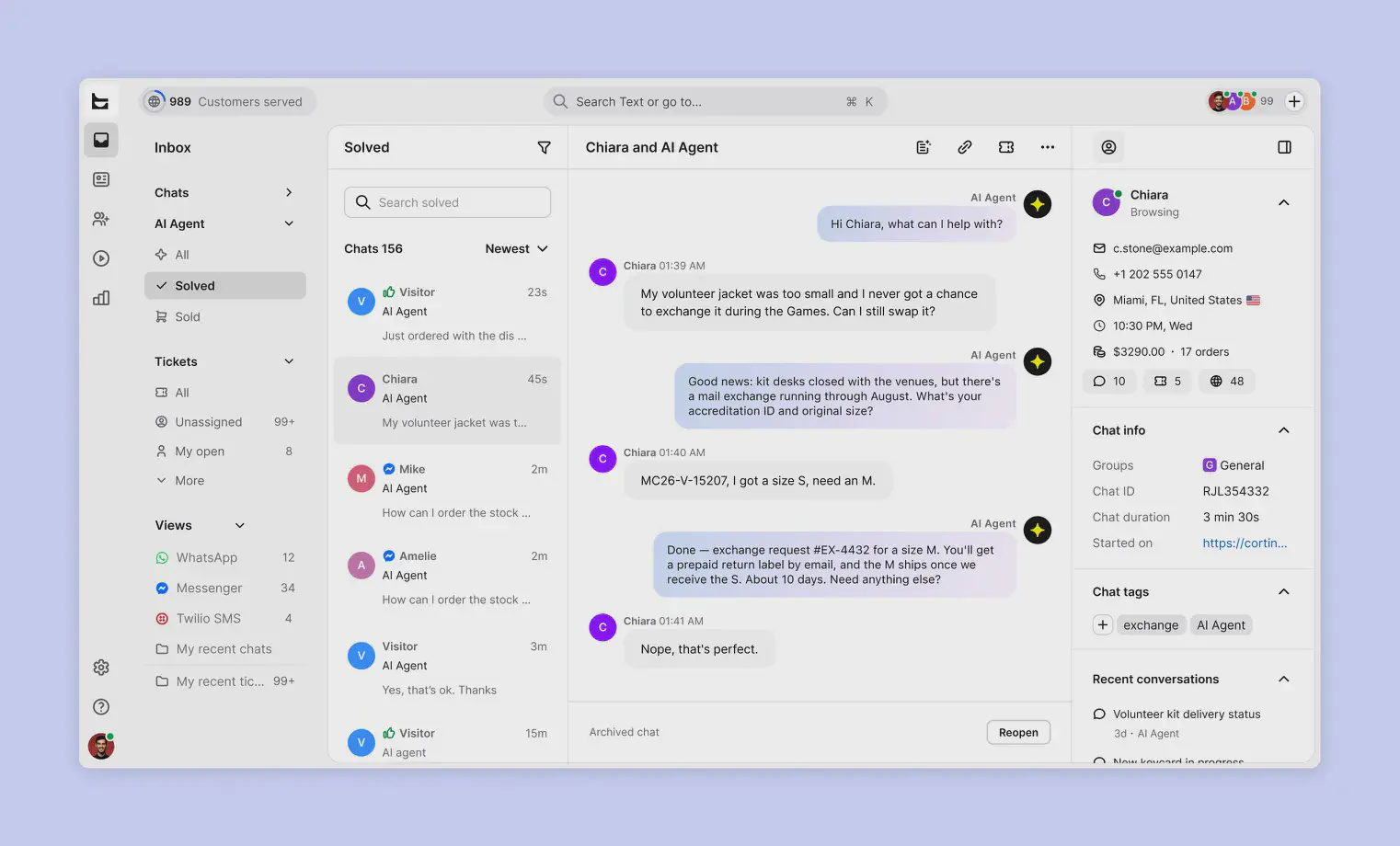
The operation handled more than 1 million messages while supporting 130,000 applicants and preparing 18,000 volunteers. Only about 650 of nearly 49,000 automated conversations reached a human agent. Text handled the rest.
Cohen used Text APIs to build his own reporting and study 73,000 interactions. The sentiment analysis found 67% positive interactions and 9% negative ones, giving the team a direct measure of how volunteers felt about the service they received.
The data was absolute gold.
Leonardo Cohen, Workforce Systems Expert at Milano Cortina 2026
Cohen has worked with many large vendors, but said the support from Text was different. He is already taking what he learned into future events, including the World Cup and LA28.
Want to grow like the companies above? This is where you start.
Free 14-day trial Simple setup