Groove Alternatives in 2026: Quick Answer & Top Picks
Short on time? The best Groove alternatives in 2026 are HelpDesk.com (best overall for ticket management), Help Scout (best shared inbox), Freshdesk (best for scaling teams), Zendesk (best for enterprise), Intercom (best for AI chat), and Zoho Desk (best value). One thing to know before you compare anything: Groove has rebranded to Helply, an AI-native support platform, so these Groove alternatives double as Helply alternatives.
That rebrand has left much of the old "Groove vs. X" content out of date. This guide fixes the problem. If you've been asking what the best Groove HQ or Helply alternatives are, the ranking below gives you real help desk tools that compete with the Groove/Helply product, each with features, pros, cons, pricing notes, and a best-for label. There's also a disambiguation section for anyone searching for a completely different "Groove."
What Is Groove (Now Helply)?
Groove is a customer support platform built around a shared inbox and a lightweight help desk. Teams use it to manage support conversations, collaborate internally, automate routine tickets, and run a knowledge base, with support ticketing, reporting and analytics, and multi-channel communication rounding out the toolkit. The idea has always been simple: streamline support and improve customer satisfaction and retention without the weight of a heavy enterprise suite.
In 2025 to 2026, Groove rebranded to Helply and relaunched in 2026 as an AI-native B2B support platform. The new Helply is built around an AI agent that doesn't just answer questions but takes real actions. Connecting to tools like Stripe and CRM systems, the AI agent can issue refunds and change plans, then route anything complex to a human agent through human handoff. Helply also generates knowledge base articles from real support tickets, and it guarantees a 65% AI resolution rate within 90 days.
Commercially, Helply's help desk layer is free to use, and the platform adds an AI layer on top of the tools you already run, and it integrates with Zendesk, Freshdesk, and Help Scout. The catch is that Helply's pricing is outcome-based and not publicly listed, so there is no public pricing to compare line by line, and costs can climb with volume. That change in identity and direction is why so many buyers are re-evaluating their options right now.
A quick note on scope. This article covers alternatives to the Groove/Helply help desk software. It does not cover Microsoft Groove Music, GrooveIP, tongue-and-groove building materials, or the Groove Machine audio plugin. If you landed here looking for one of those, jump to the disambiguation section near the end.
Why Look for Groove Alternatives?
Most teams start shopping for alternatives to Groove for practical, commercial reasons. They have outgrown a simple shared inbox, they need deeper automation, or they want tighter integrations with the CRM and e-commerce stack they already run. The move to Helply and outcome-based pricing has also pushed current users to ask whether the platform still fits their budget and workflow. In other words, people hunting for the best Helply alternative tend to want more room to grow, and often a real free plan or clearer costs.
When you weigh a switch, anchor the decision to a handful of criteria: the depth of key features, integration options, automation and AI, how well the tool scales as ticket volume grows, and total cost. The weaknesses below map neatly onto those same criteria.
Groove's Main Weaknesses & Limitations
Based on the product's own history and commonly reported user feedback, here are the limitations that send teams looking elsewhere:
- Limited customization. Some users have found Groove's customization both limited and fiddly, and it can take extra time and effort to configure the system to specific needs. Teams that want granular control over layouts, fields, and workflows often feel boxed in.
- Limited integrations. Groove's integration catalog is comparatively narrow, which becomes a real disadvantage when you need to connect support to a CRM, an e-commerce platform, or a wider tool ecosystem.
- Thin automation. Groove has historically lacked advanced automation such as sophisticated workflow rules and AI chatbot flows, and that can slow resolution times and cap efficiency.
- Limited scalability. For large organizations with complex support needs and high ticket volumes, Groove can feel underpowered. It was never built to be an enterprise-grade contact center.
- Higher pricing at scale. Costs can climb as you add advanced features or integrations, a concern for smaller companies and budget-conscious teams. Helply's outcome-based model can also get expensive fast without spending caps to keep it predictable.
How We Evaluated the Best Groove Alternatives
This is not a copy-paste list. We ranked and profiled each tool against the criteria that actually matter when you replace a help desk:
- Core features: ticketing, shared inbox, knowledge base, reporting.
- AI and automation: AI chatbot, AI agents, sentiment analysis, workflow rules.
- Integrations: CRM, e-commerce, chat, and the wider app ecosystem.
- Pricing transparency: clear plans, free trials, and free plans.
- Scalability: how gracefully the tool grows with your volume and team.
- Support quality and reviews: the vendor's own support and what real users say.
Where we could not independently verify an exact price, we've told you to check the vendor's current pricing rather than guess. Plans and structures change often, and in 2026 that is doubly true as tools shift toward usage- and outcome-based models.
How to Choose the Right Groove Alternative for Your Team
Start with a short needs assessment. Which channels are non-negotiable: email, live chat, phone, social? A team fielding phone calls needs a very different tool than one that lives entirely in email.
Next, decide how much AI you actually want. Some teams simply want faster macros and routing. Others want an AI agent that resolves tickets end to end and takes real actions. Then map your integration ecosystem. If you run Shopify, Salesforce, Slack, Mailchimp, or Zoho CRM, prioritize tools with native connectors.
Finally, weigh budget against scale. A small business should favor a generous free plan or low per-agent pricing. An enterprise should prioritize automation, reporting, and reliability over the sticker price. Whatever you shortlist, use the free trial. Hands-on testing beats any spec sheet.
Best Groove Alternatives at a Glance (Comparison Table)
| Tool | Type | Best for | Starting price | Free plan / trial |
|---|---|---|---|---|
| HelpDesk.com | Ticketing help desk | Overall + ticket management | Check current pricing | 14-day trial |
| Help Scout | Shared inbox help desk | Human-centric support | Check current pricing | Free trial |
| Freshdesk | Omnichannel help desk | Scaling teams | Check current pricing | Free plan + trial |
| Zendesk | Enterprise support suite | Enterprise / omnichannel | $55/agent/mo | Free trial |
| Intercom | Messaging + AI platform | AI chat & live chat | $29/seat/mo | 14-day free trial |
| Zoho Desk | Help desk | Value / Zoho users | Check current pricing | Free plan + trial |
| HubSpot Service Hub | CRM-integrated service | Unified sales + service | Check current pricing | Free tools + trial |
| LiveAgent | Omnichannel + call center | Phone / multichannel | Check current pricing | Free plan + trial |
| Hiver | Gmail/Outlook help desk | Email-native teams | Check current pricing | Free trial |
| Tidio | Live chat + AI | SMB e-commerce | $29/mo | Free plan + trial |
| ProProfs Help Desk | Help desk + KB | Self-service | Check current pricing | Free trial |
Always confirm the latest numbers on each vendor's pricing page before you commit. Plan tiers and free-plan limits shift frequently.
The 11 Best Groove Alternatives & Competitors in 2026
Each profile below follows the same shape: a quick overview, a best-for label, the key features, the pros, the cons you won't love, pricing notes, and how the tool stacks up against Groove.
HelpDesk.com — Best Overall & Best for Ticket Management
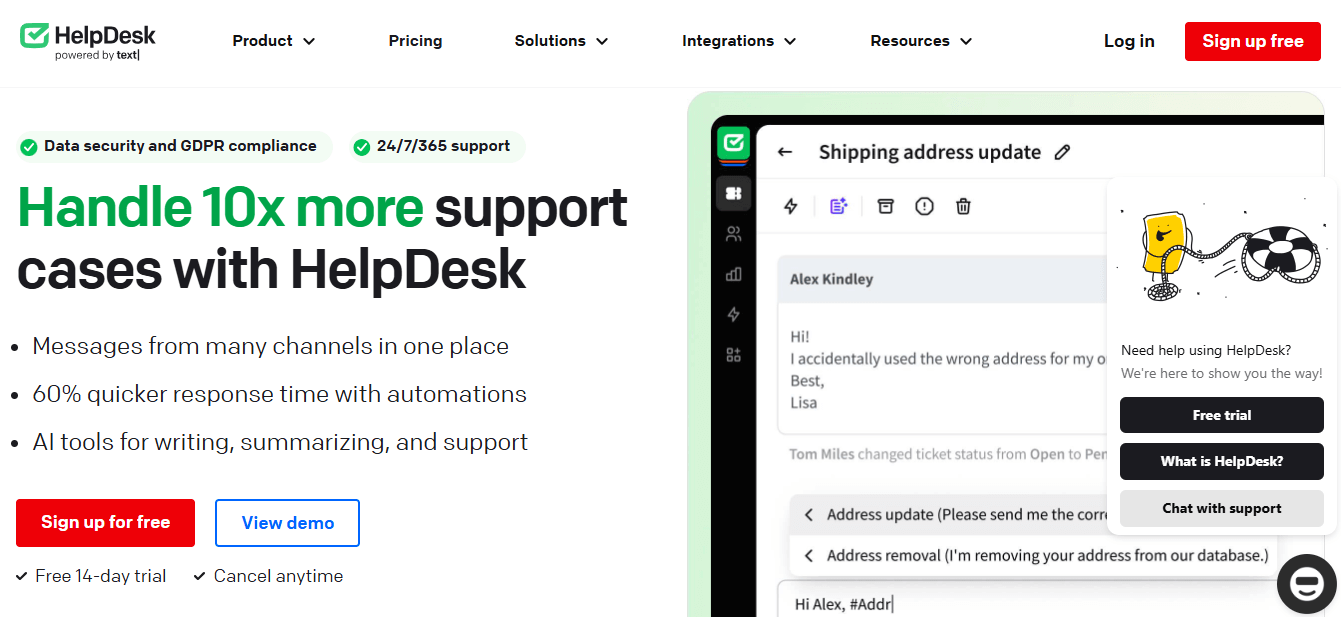
HelpDesk.com is a cloud-based ticketing system built for small to mid-market businesses that want a clean, powerful support platform without enterprise complexity. It consolidates messages from multiple channels including email and live chat into one app, helps support agents resolve routine tickets quickly, and pairs a friendly interface with genuinely customizable workflows.
It suits teams that want top-tier ticket management with room to scale. The feature set covers ticket management, AI-powered tools, automation for workflows, routing, and ticket summaries, end-to-end personalization of the system, and customizable reporting. Built by the team behind LiveChat and ChatBot.com, it comes with native live chat and a built-in AI agent, so you can automate conversations as you grow.
On the plus side, you get a user-friendly interface, seamless integration with other systems in the ecosystem, and exceptional customer support. The reporting and workflow customization go well beyond what a basic shared inbox offers. The trade-off: as a focused help desk, it isn't a full enterprise contact-center suite out of the box, so very large operations with heavy phone volume may need to combine it with complementary support tools.
HelpDesk.com's user-based subscription pricing scales with your team, and a 14-day free trial lets you test it before you pay. Check the current pricing page for the latest per-user plans.
Why it beats Groove: HelpDesk.com answers Groove's biggest gaps directly, with deeper customization, stronger automation and AI, native live chat, and a built-in AI agent. It's built to scale ticket volume gracefully, so you won't hit the ceiling that pushes teams off Groove in the first place.
Try HelpDesk.com!
Help Scout — Best for Shared Inbox & Human-Centric Support
Help Scout is a customer service platform centered on a customer-first approach. Teams collaborate on inquiries in a shared inbox, streamline communication, and pull insights from reporting and analytics, all while keeping the experience personal rather than robotic.
It's a natural fit for teams that loved Groove's shared-inbox feel but want more polish. Key features include a shared inbox, a help center and knowledge base, live chat, email integration, self-service options, and reporting tools.
The interface is user-friendly, the features are customizable, and the customer support is exceptional. Arguably it's the closest like-for-like to Groove's shared-inbox philosophy. One caveat: as a human-first tool, its automation and AI depth may not satisfy teams chasing heavy ticket deflection or advanced routing.
Help Scout offers a free trial. See the pricing page for current plans.
Why it beats Groove: Help Scout matches Groove's collaborative inbox but layers on stronger reporting, a mature knowledge base, and a more refined agent experience.
Freshdesk — Best for Omnichannel & Scaling Support Teams
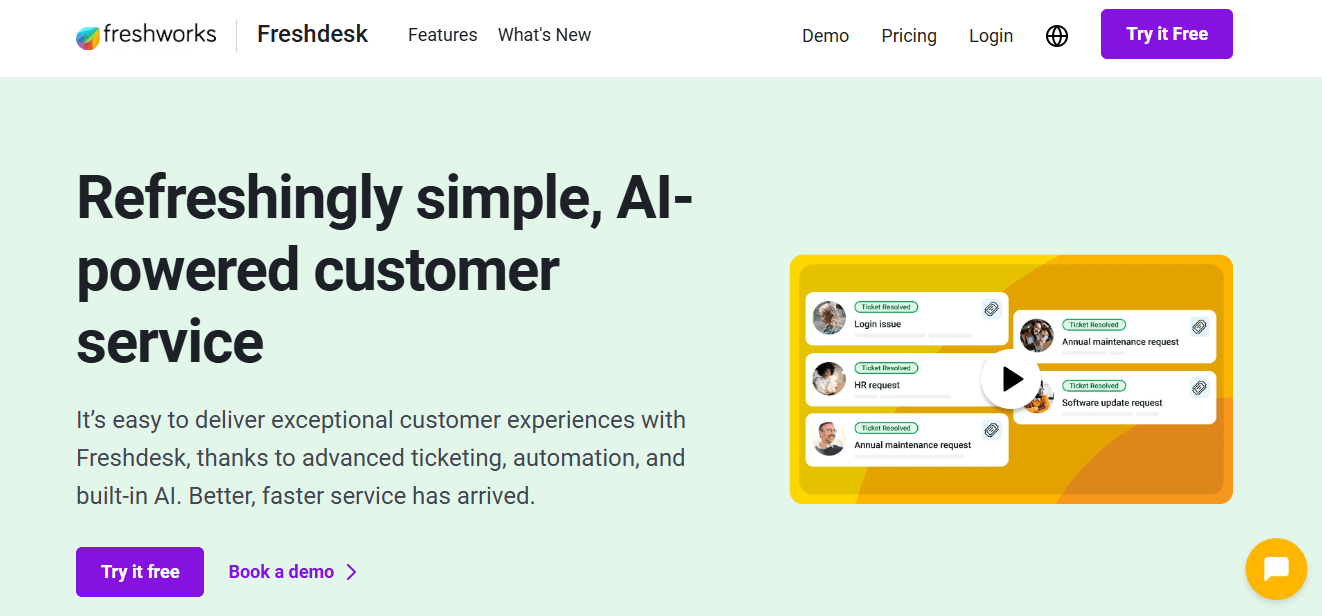
Freshdesk, from Freshworks, is a cloud-based support platform that manages interactions across email, phone, chat, and social media. It's designed to streamline and automate support at scale.
Growing teams that need omnichannel support will get the most from it. Features include a ticketing system, automation, team collaboration, self-service portals, knowledge base management, and analytics.
The interface is easy to use, the features are powerful, and integrations across many platforms are seamless. It scales well as ticket volume climbs. The downside is that the breadth of features can feel like a lot for a tiny team, and advanced capabilities live on higher tiers.
Freshdesk offers a free trial and is well known for a free plan tier. Confirm details on the pricing page.
Why it beats Groove: Freshdesk is built for scale and true omnichannel support, which is exactly where Groove's limited scalability and channels fall short.
Zendesk — Best for Enterprise & Omnichannel Automation
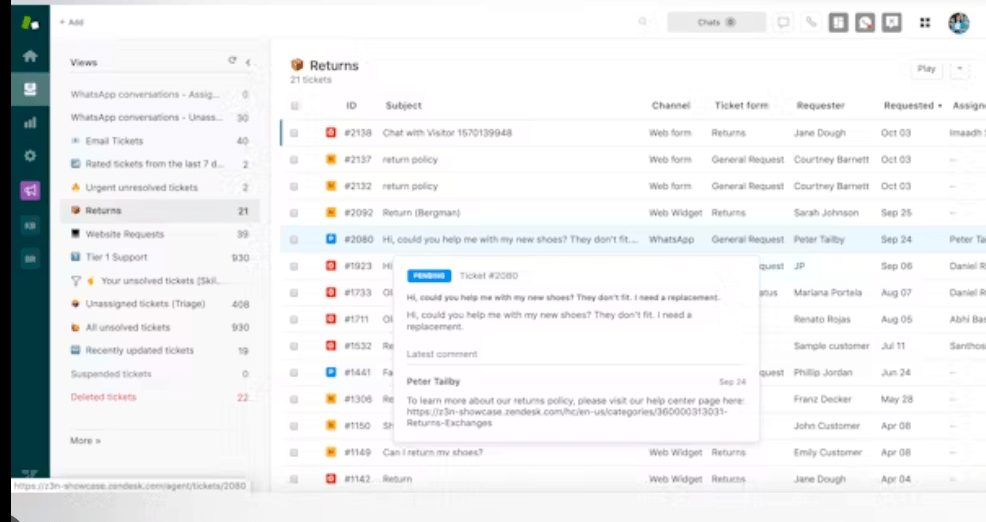
Zendesk is a cloud-based customer service platform engineered to help businesses build better customer relationships across email, phone, chat, and social. It's scalable and customizable enough to fit companies of all sizes, with a heavy enterprise pedigree.
Enterprise teams and high-volume operations are the sweet spot. Features include multichannel support, AI-powered automation, workforce management, and customizable reporting and analytics.
It's easy to use, highly customizable, and able to centralize customer interactions into a unified inbox for seamless management at scale. With that power, though, come complexity and cost. Smaller teams can find it overkill, and full functionality can get expensive fast.
Zendesk's pricing starts at $55 per agent per month, and it offers a free trial, including a startup program.
Why it beats Groove: Zendesk goes where Groove can't, with enterprise-grade automation, workforce management, and volume handling for complex support operations.
Intercom — Best for AI Chatbots & Live Chat Messaging
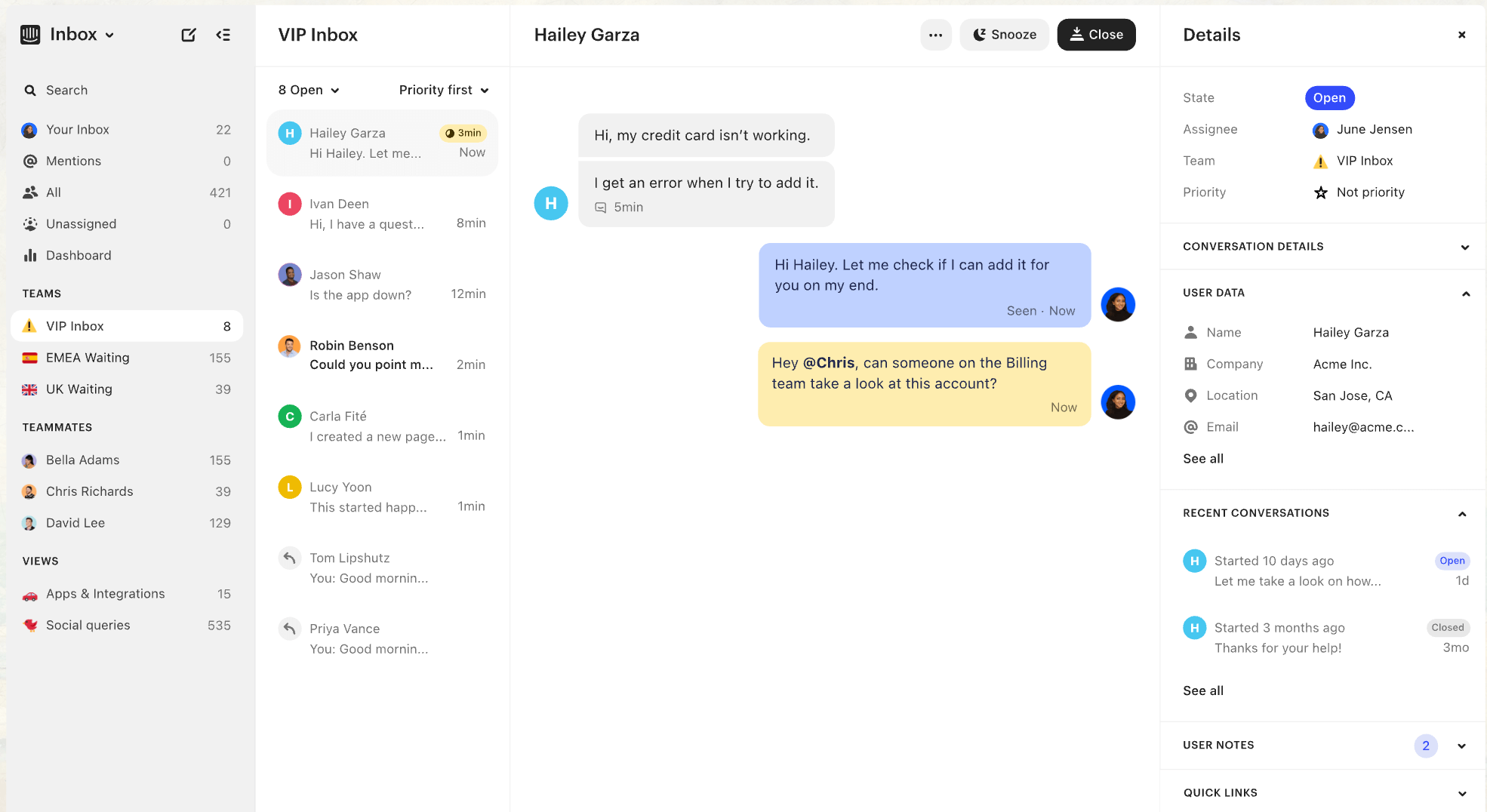
Intercom is a customer messaging platform that connects businesses with customers through live chat, email, and in-app messages. It leans hard into personalized, targeted interactions backed by an AI chatbot and analytics.
Teams that put conversational, AI-driven chat first will feel at home. Features include personalized messaging, automated interactions through chatbots and AI agents, in-app messaging, lead capture through targeted messages, and analytics.
Strengths include strong personalization, robust automation, and seamless integration with existing systems. The catch is pricing: the model can be complex and hard to predict, especially as your contact base and AI usage grow.
Intercom's pricing starts at $29 per seat per month, billed annually, with a 14-day free trial.
Why it beats Groove: Intercom's AI chatbot and live-chat capabilities are far ahead of Groove's historically thin automation, which makes it ideal if conversational AI is your priority.
Zoho Desk — Best for Zoho Ecosystem & Value
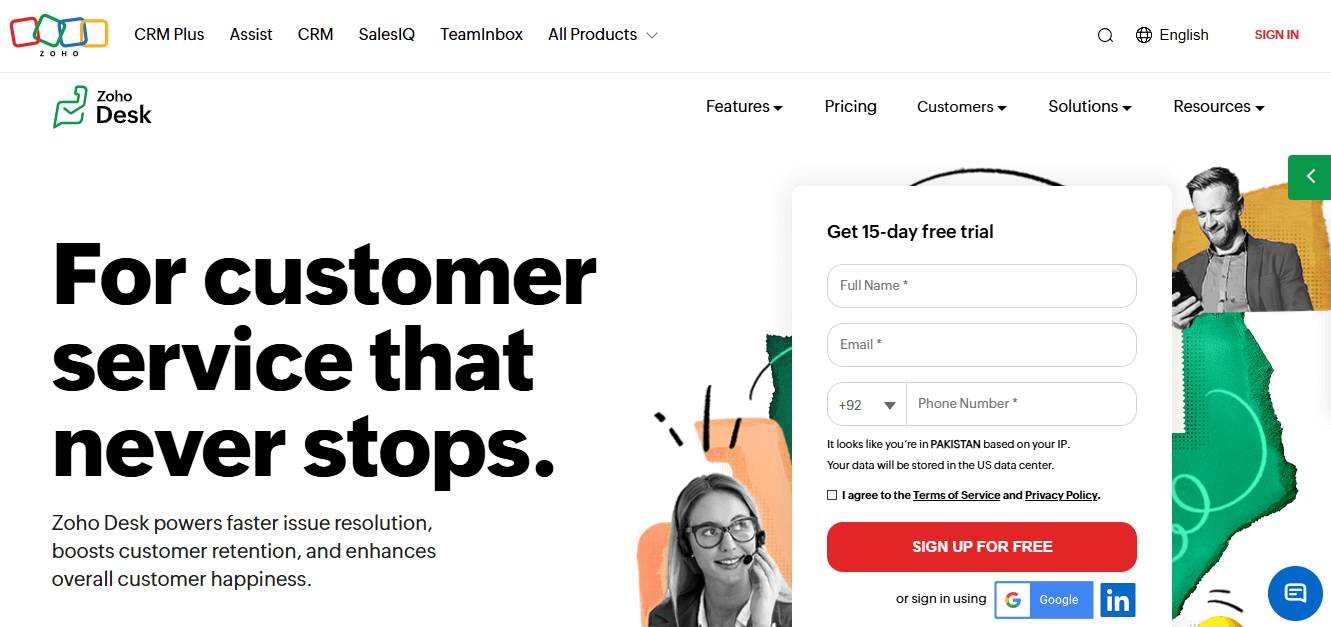
Zoho Desk is a context-aware help desk with multichannel ticketing and a built-in AI assistant, Zia. It's a strong value pick, particularly if you already use other Zoho apps.
Budget-conscious teams inside the Zoho ecosystem will benefit most. Features include ticketing, an AI assistant in Zia, multichannel support, and native Zoho CRM integration.
The value is excellent, the integration with Zoho CRM and the broader Zoho suite runs deep, and small teams get a capable free-friendly footprint. It is most powerful, however, when you're all-in on Zoho. Standalone users may not tap its full potential.
Zoho Desk is known for a free plan for small teams plus paid plans. Check current pricing to confirm the latest limits.
Why it beats Groove: Zoho Desk offers stronger integrations, especially CRM, and a built-in AI assistant at a value price that undercuts Groove's cost concerns.
HubSpot Service Hub — Best for CRM-Integrated Support
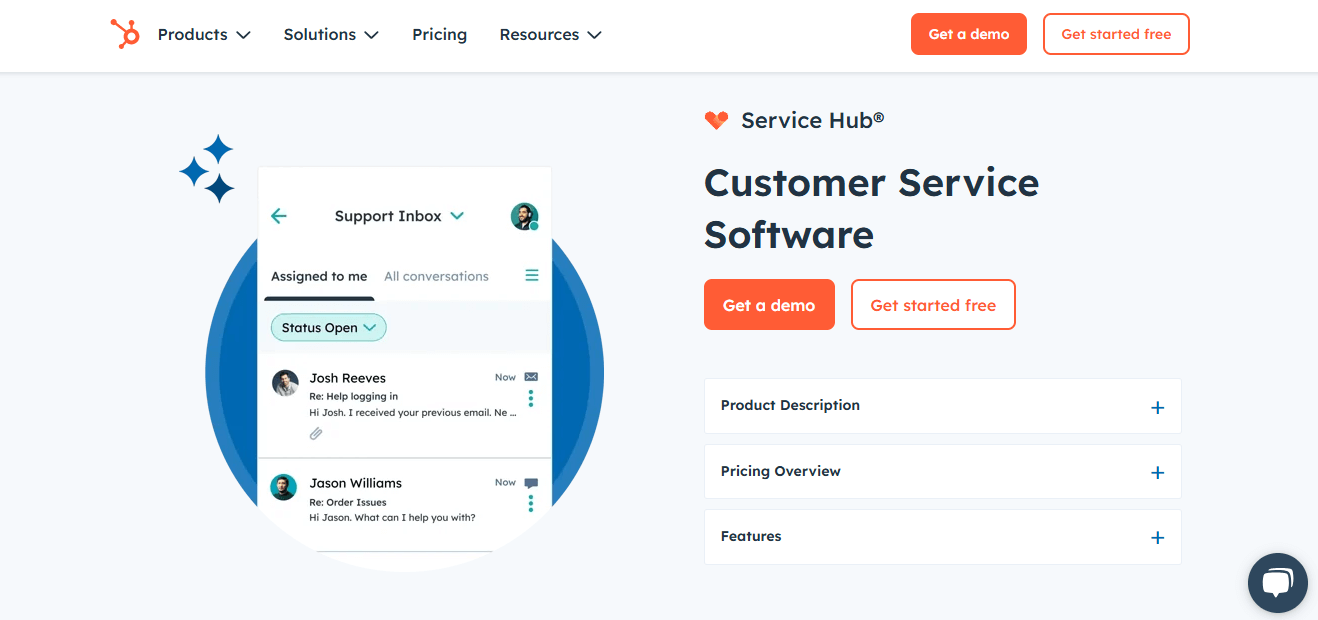
HubSpot Service Hub bundles help desk ticketing, a knowledge base, and automation on top of HubSpot's native CRM, so sales, marketing, and service share one source of truth.
Teams that want unified sales and service data are the natural audience. Features include tickets, a knowledge base, automation, and native HubSpot CRM integration.
The CRM integration is the star, working like a CRM with ticketing to give you full customer context in every conversation, and HubSpot's well-known free tools help too. Watch the cost, though, since it can escalate as you climb HubSpot's tiers and add seats or hubs.
HubSpot offers free tools plus paid plans. Verify current pricing before committing.
Why it beats Groove: native CRM integration solves Groove's limited-integration weakness for teams that want support and sales data in one place.
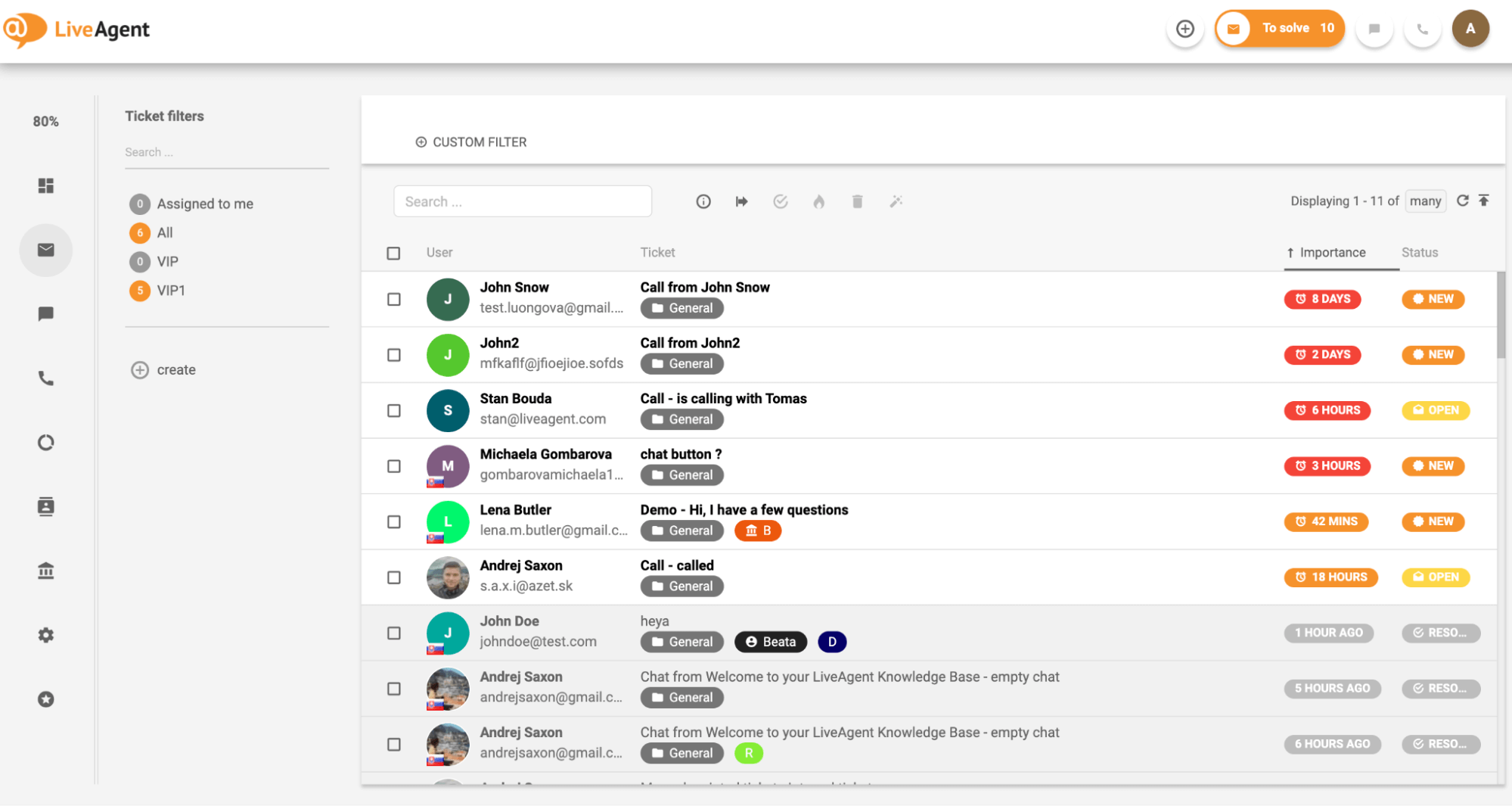
LiveAgent — Best for Multichannel & Built-in Call Center
LiveAgent is an omnichannel help desk with a built-in call center, combining ticketing, live chat, and phone support in one place.
It fits teams that need real phone and omnichannel support. Features include ticketing, live chat, call center and phone support, and social channels.
The channel coverage is genuinely broad, voice included, and there's a free plan option for teams getting started. The trade-off is that the dense feature set and interface can feel busy compared with minimalist tools.
LiveAgent offers a free plan alongside paid tiers. Check current pricing for details.
Why it beats Groove: the built-in call center delivers phone support Groove doesn't natively provide, closing a big omnichannel gap.
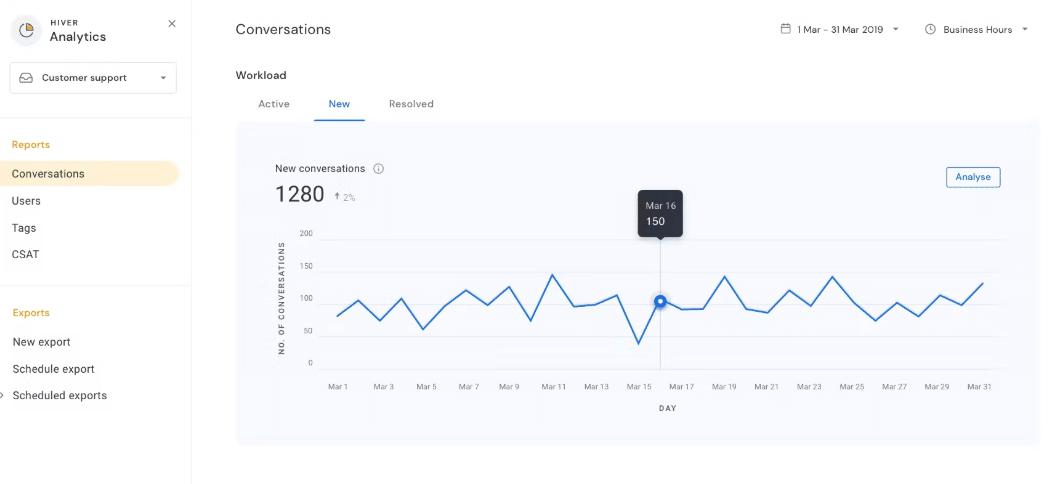
Hiver — Best for Gmail & Outlook-Based Help Desk
Hiver turns Gmail and Outlook into a shared help desk, so agents manage support without leaving the inbox they already use every day.
Teams that live inside their email client will love it. Features include shared inboxes inside Gmail and Outlook, automation, and analytics.
The learning curve is almost nonexistent for Google Workspace and Outlook teams, and the assignment and collaboration features are solid. The limitation is that Hiver is tied to your email client's environment, so it's less suited to teams that want a fully standalone, heavily branded portal.
Hiver offers a free trial. Confirm plan pricing on its site.
Why it beats Groove: for inbox-first teams, Hiver keeps everyone in Gmail or Outlook while adding shared-inbox structure that Groove would make you leave your email for.
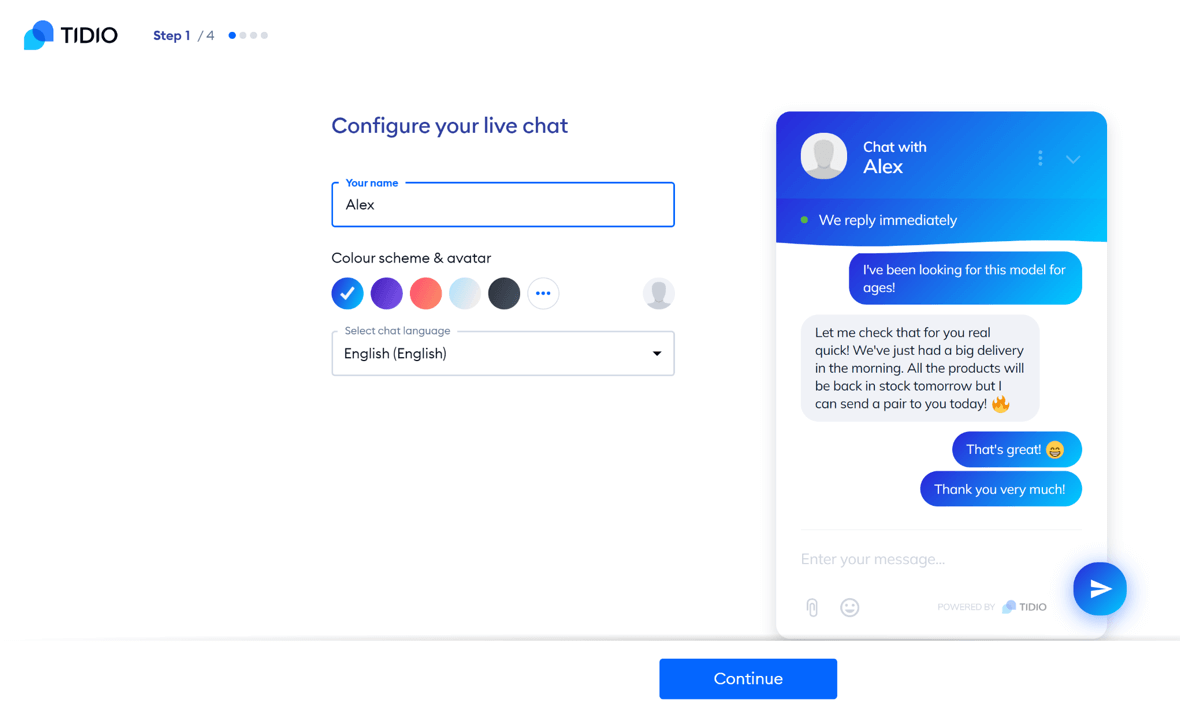
Tidio — Best for Small Business Live Chat & AI
Tidio is a live chat and chatbot platform popular with small teams and online stores, powered by its Lyro AI chatbot and tight e-commerce integrations.
SMB and e-commerce teams are the target. Features include live chat, the Lyro AI chatbot, and e-commerce integrations including Shopify.
Setup is easy, the free plan is approachable, and the AI can answer common questions automatically. Just know that Tidio is chat-and-conversion focused, so it isn't a full support platform for enterprise ticketing.
Tidio offers a free plan plus paid plans starting at $29 per month. Check current pricing.
Why it beats Groove: Tidio pairs affordable live chat with AI and Shopify-ready commerce integrations, ideal for the small online stores that Groove's pricing can squeeze.
ProProfs Help Desk — Best for Self-Service & Knowledge Base
ProProfs Help Desk combines a shared inbox with strong self-service tooling, including a knowledge base and surveys to reduce ticket volume.
It's a good match for teams that want to deflect support tickets with self-service. Features include a shared inbox, a knowledge base, surveys, and reporting.
The self-service is well rounded, setup is straightforward, and the customer feedback tools are useful. Its brand recognition and marketplace of integrations, though, are smaller than the biggest players'.
ProProfs offers a free trial. Verify current plans on its site.
Why it beats Groove: its knowledge base and self-service focus help you cut inbound volume, an area where Groove's toolkit is thinner.
Other Notable Groove & Helply Alternatives to Consider
A few more Groove and Helply alternatives worth a look:
- Featurebase, best for feedback boards and feature requests. It combines AI support, help center, and feedback management in one platform, with a free plan offering unlimited conversations and paid plans starting at $29 per seat per month. Its AI agent resolves issues autonomously and takes actions.
- eesel AI, best for bolting an AI layer onto an existing help desk. It connects to Zendesk and Freshdesk for ticket resolution and charges about $0.40 per ticket handled.
- Crisp, best for small teams that want a shared inbox and chatbot builder in one suite. It's a lightweight chatbot platform that offers a free plan and charges $45 per month for its Mini tier.
- Bookbag, best for online stores, integrating directly with Shopify and WooCommerce.
- Kayako, best for conversational, context-rich support with a unified customer view.
- HelpMonks, best for collaborative shared-inbox email management for teams.
- EngageBay, best for all-in-one marketing, sales, and support on a budget.
- SolarWinds Service Desk, best for IT service management (ITSM) and internal support.
- TeamSupport, best for B2B support teams managing complex accounts.
AI Capabilities Compared: Chatbots, Automation & AI Agents
AI is the defining battleground in 2026, and it's the whole reason Groove rebranded to the AI-native Helply. The metric that matters most is resolution rate, the share of support conversations an AI agent closes without human handoff. Here's how the alternatives compare.
- AI agents that take real actions: Helply's AI agent goes beyond canned AI replies to issue refunds and change plans, and Featurebase's AI agent resolves issues autonomously and takes actions too. This action-taking is the real difference between a modern AI agent and an older AI chatbot that only answers questions.
- AI agents that resolve tickets: Intercom (AI agent), Tidio (Lyro), and Zoho Desk (Zia) lead here, with AI that can answer and close common support conversations before routing anything complex to a human agent through human handoff.
- AI-assisted ticketing and workflows: HelpDesk.com brings AI-powered tools plus automated workflows to speed up triage and responses on routine tickets. Zendesk and Freshdesk offer AI-powered automation aimed at higher volumes and better resolution rate.
- Chatbots and live chat automation: Intercom and Tidio are chat-first, and Crisp bundles a chatbot platform with its shared inbox. HelpDesk.com pairs a built-in AI agent with native live chat for automated conversations.
- AI search and sentiment: enterprise-grade suites such as Zendesk use AI to surface trends and prioritize tickets, while AI search across a knowledge base helps customers self-serve answers instantly.
If conversational AI is your top requirement, Intercom and Tidio are natural fits. If you want an AI agent that takes real actions on top of your existing help desk, Helply and eesel AI are worth a test. And if you want AI woven into a clean ticketing workflow, HelpDesk.com is the balanced choice.
Free Plans & Free Trials Compared
Want to test before you pay? Here's the quick breakdown based on what's verifiable.
- Free trials: HelpDesk.com, Help Scout, Zendesk, and Intercom (14-day) all offer trials so you can evaluate hands-on.
- Free plans: Freshdesk, Zoho Desk, LiveAgent, Tidio, Crisp, and Featurebase (with unlimited conversations) are well known for free tiers for smaller teams, and HubSpot offers free tools within Service Hub.
Helply itself offers a free help desk layer, but its AI layer runs on outcome-based pricing rather than a real free plan. Free-plan limits and trial lengths change, so confirm the current terms on each vendor's pricing page before you build your evaluation around them.
Which Groove Alternative Should You Choose?
Here are our picks by use case.
- Best overall: HelpDesk.com, the strongest blend of ticket management, AI, automation, and integrations.
- Best for small business: Tidio or Zoho Desk, affordable, with free options and quick setup.
- Best for enterprise: Zendesk, built for scale and complex, high-volume support.
- Best for live chat: Intercom, conversational messaging with a polished chat experience.
- Best for AI: Intercom or Tidio for AI agents, HelpDesk.com for AI inside your ticketing flow, and Helply if you want an AI agent that takes real actions.
- Best for self-service: ProProfs Help Desk, knowledge base and deflection first.
- Best for Gmail/Outlook teams: Hiver, a help desk that lives in your inbox.
If you want one tool that fixes Groove's core weaknesses without a steep learning curve, start a free HelpDesk.com trial and test the ticketing and automation for yourself.
Not the Help Desk? Other 'Groove' Alternatives Explained
"Groove" means very different things depending on what you're searching for. If you didn't come here for support software, the sections below point you to the right answer.
Groove Music Alternatives (Microsoft Groove Music)
Microsoft discontinued Groove Music's streaming service, and the app was eventually retired from its central role in Windows. If you want a similar experience, verifiable Groove music alternatives include Spotify for streaming, plus Windows Media Player, Winamp, VLC, MusicBee, and foobar2000 for playing your local library. For an interface reminiscent of the classic Grooveshark-style streaming era, most listeners now use Spotify or another mainstream streaming service.
Groove Music Alternatives for Windows 10 & Windows Phone
On Windows 10, desktop players such as MusicBee, foobar2000, VLC, Winamp, and Windows Media Player all handle local music libraries well and work as solid alternatives to Groove music. Note that Windows Phone itself has been deprecated by Microsoft, so there's no supported modern successor to Groove Music on that platform.
Alternatives for Downloading Music from OneDrive
Groove Music once let you stream and play music stored in OneDrive. With that feature gone, the simplest free approach is to use the OneDrive app to download your music files to your device, then play them in any local player such as VLC, MusicBee, foobar2000, or Windows Media Player. Your files stay in the cloud while you play them locally.
GrooveIP Alternatives (VoIP / Calling App)
GrooveIP is a Wi-Fi/VoIP calling app, completely separate from the music and help desk products. Popular alternatives for calling and texting over the internet include Google Voice, TextNow, and Talkatone, all of which have iOS options for users who want to replace GrooveIP on their iPhone.
Tongue and Groove Alternatives (Construction & Building)
For building projects, common tongue and groove alternatives include shiplap for walls and ceilings, click-lock or floating flooring systems (a practical option when you want thinner flooring), beadboard for a paneled look, and composite or fiber-cement siding as more durable, often more sustainable siding choices. For porch and ceiling applications, beadboard and composite panels are frequent substitutes, and construction adhesives can replace or supplement mechanical joints where appropriate. When you weigh alternatives to tongue and groove, always check manufacturer specs for your specific span, spacing, and load requirements.
Groove Audio Production Tool Alternatives (VST & Max/MSP)
If you mean FL Studio's Groove Machine plugin, other drum and groove VST instruments and step-sequencer plugins can fill the same role in your DAW. If you're working in Max/MSP and want an alternative to the groove~ object for sample playback, other buffer-playback objects within Max/MSP handle looping and variable-speed playback. Choose based on the exact playback and manipulation features your patch needs.
Alternatives to the Word 'Groove' & Other Groove Products
Searching for synonyms? Depending on context, alternatives to the word "groove" include rut, channel, furrow, slot, or trench for a physical indentation, and rhythm, beat, or flow in a musical sense. And if you're after the Groove Glove product, look for comparable grooming or cleaning gloves from other brands that suit your specific use.
Frequently Asked Questions About Groove Alternatives
What is Groove and is it a full help desk?
Groove is a customer support platform built around a shared inbox, with ticketing, a knowledge base, reporting, and multi-channel communication. It's a capable help desk for small teams, but historically it's lighter on advanced automation, integrations, and enterprise-scale features than the biggest platforms.
Is Helply free to use?
Helply's help desk layer is free to use, so you can adopt the shared inbox and help center at no cost. Its AI layer, however, runs on outcome-based pricing that isn't publicly listed, so you effectively pay for resolutions rather than a flat per-seat fee, and costs can grow expensive fast without spending caps. That differs from tools with a real free plan like Freshdesk, Zoho Desk, or Tidio. If a predictable, published cost matters, one of those Helply alternatives may make more sense.
What are the benefits of using Helply?
The main benefit is action-taking AI: Helply's AI agent doesn't just answer questions, it takes real actions like issuing refunds and changing plans by connecting to Stripe and your CRM. It generates knowledge base articles from real support conversations, layers an AI agent onto your existing help desk, and guarantees a 65% AI resolution rate within 90 days, with human handoff for anything complex. The trade-off is outcome-based pricing that can climb with volume.
What integrations does Helply support?
Helply integrates with major help desks including Zendesk, Freshdesk, and Help Scout, adding an AI layer on top of the support platform you already run. Its AI agent can also connect to tools like Stripe and CRM systems to take real actions rather than only answer tickets.
Why do businesses look for Groove alternatives?
Teams switch to gain a more robust feature set, deeper integrations with CRM and e-commerce tools, stronger automation and AI, and better scalability. Pricing concerns and the recent rebrand to Helply also prompt buyers to reassess whether the platform still fits.
What are Groove's main weaknesses?
The most commonly cited limitations are restricted customization, a limited integration catalog, a lack of advanced automation and AI chatbots, limited scalability for high-volume teams, and pricing that can rise as you add features or integrations.
Has Groove rebranded, and what is Helply?
Yes. Groove rebranded to Helply and launched in 2026 as an AI-native B2B support platform with outcome-based pricing. That change in direction is a big reason existing users are exploring alternatives in 2026.
What is the best Groove or Helply alternative in 2026?
Our top overall pick and the best Helply alternative for most teams is HelpDesk.com, thanks to its strong ticket management, AI-powered tools, automated workflows, native live chat, and a built-in AI agent. The best choice for you depends on your channels, your budget, and how much AI you need.
How much do alternatives cost compared to Groove?
Pricing varies widely and changes often, so check each vendor's current pricing page. Many alternatives offer free plans (Freshdesk, Zoho Desk, LiveAgent, Tidio, Crisp, Featurebase) or free trials (HelpDesk.com, Help Scout, Zendesk, Intercom), letting you test value before you pay. Intercom starts at $29 per seat per month and Zendesk at $55 per agent per month.
Which is best for small business vs. enterprise?
For small teams, Tidio and Zoho Desk are affordable and easy to start. For enterprise teams and high-volume operations, Zendesk provides the scalability, automation, and workforce management that a lightweight tool can't match.
Which alternatives offer AI chatbots and automation?
Intercom (AI agent), Tidio (Lyro), and Zoho Desk (Zia) offer AI-driven chat and resolution. HelpDesk.com brings AI-powered tools and automated workflows, and Zendesk and Freshdesk provide AI-powered automation for larger teams. Helply and Featurebase add AI agents that take real actions.
Which offer live chat and omnichannel support?
Intercom and Tidio are chat-first, and HelpDesk.com includes native live chat. Freshdesk and Zendesk cover email, phone, chat, and social, while LiveAgent adds a built-in call center for true omnichannel support, voice included.
Do these alternatives integrate with CRM and e-commerce tools?
Yes. HubSpot Service Hub and Zoho Desk offer native CRM integration, Tidio and Bookbag connect with Shopify and other e-commerce platforms, and most tools support popular apps like Salesforce and Mailchimp and can bring Slack conversations into a shared inbox, which directly addresses Groove's limited-integration weakness.
Which is best for self-service and knowledge base?
ProProfs Help Desk is a strong self-service pick with its knowledge base and surveys. Help Scout and Freshdesk also offer capable knowledge bases and help center portals to deflect repetitive tickets.
Conclusion: The Best Groove Alternative for 2026
With Groove now Helply and moving to AI-native, outcome-based pricing, 2026 is the right moment to reassess your help desk. If you want the best overall balance of strong ticket management, AI-powered tools, flexible automation, clean integrations, and room to scale, HelpDesk.com is our top recommendation and the best Helply alternative for most teams.
From there, choose by use case: Zendesk for enterprise, Intercom for AI-driven chat, Tidio or Zoho Desk for value-focused small teams, LiveAgent for phone-heavy omnichannel support, Hiver for inbox-native teams, and ProProfs for self-service. Whatever your shortlist, take advantage of a free trial and test it against your real tickets. The fastest way to know if HelpDesk.com fits is to start a free trial and see the workflow for yourself.
Try HelpDesk.com for free!How to transition smoothly to HelpDesk.com
Transitioning to a new helpdesk tool can be challenging, but with careful planning and execution, you can ensure a smooth migration of your tickets and data.
Migrate for free from Groove ticketing system
We're here to support you during the entire migration process, offering information about any related costs and, if possible, covering them for you.